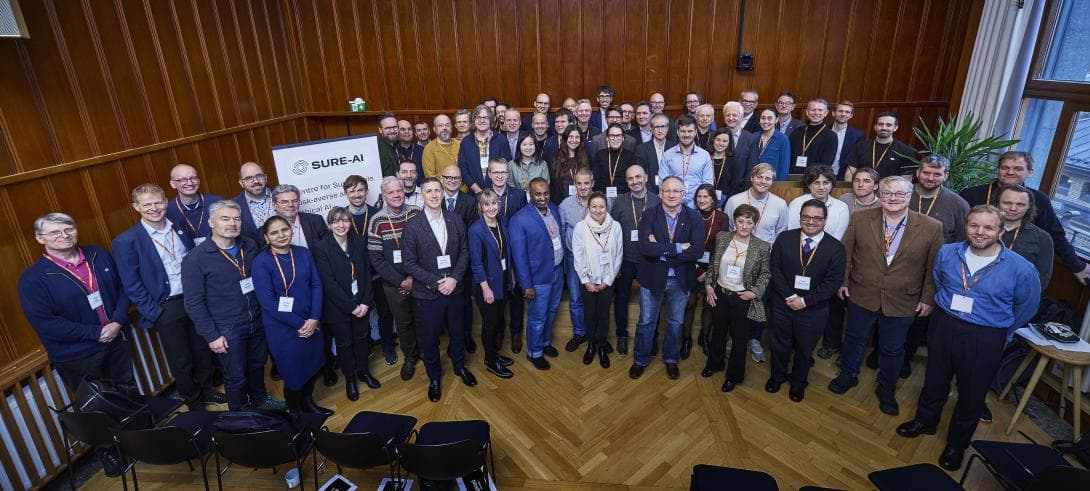
The opening of Norway’s new centre for sustainable, risk-averse and ethical AI
Published:
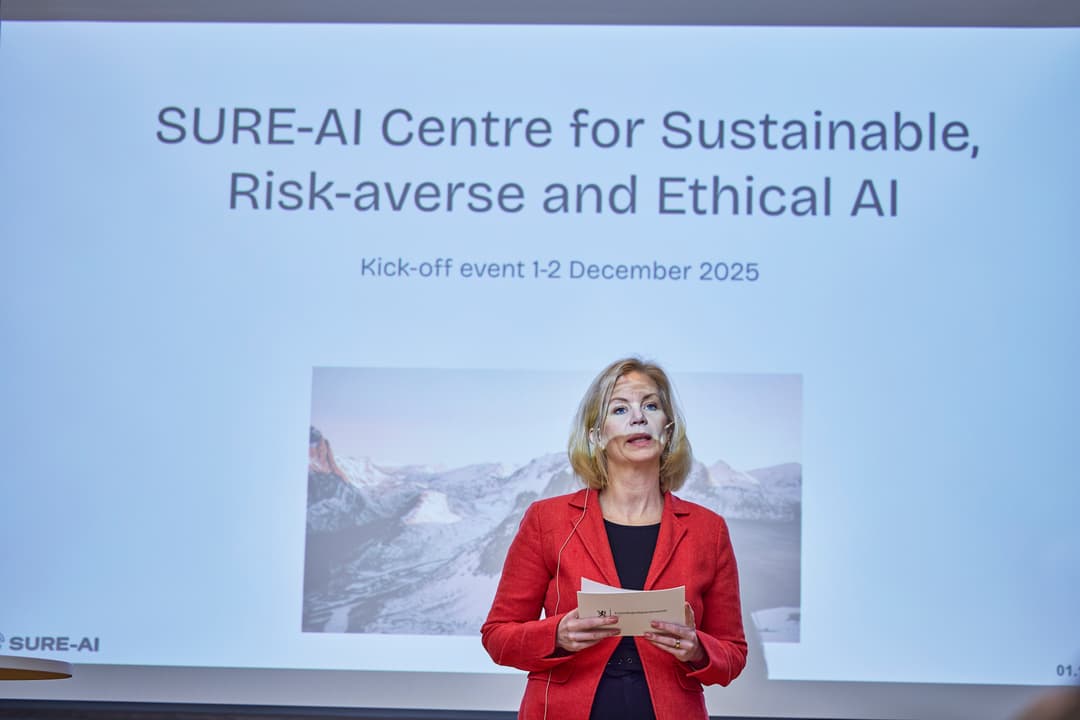
SURE-AI officially opened on December 1st with a full programme at Simula Research Laboratory, gathering all 19 partner institutions. The day was opened by the Minister of Research and Higher Education, Sigrun Aasland.
This marked the start of the next five years of dedicated work to develop sustainable, risk-averse and ethical artificial intelligence.
“A centre that tackles society’s most pressing challenges head-on”
In her opening remarks (regjeringen.no), Aasland highlighted that SURE-AI presents a strong framework for world-class research. “You have created a center that tackles society’s most pressing challenges head-on.”
She pointed to three ways in which SURE-AI addresses these challenges. First, “by building human values right into the algorithms, you are making them, as you say best yourself, ethical from the inside out.”
Second, she emphasised that AI should not come at the expense of our environment. “SURE-AI’s focus on building efficient models with low environmental impact reflects Norway’s vision for green technology that supports long-term prosperity.”
Finally, she underscored the importance of bridging research and industry. “Knowledge alone is not enough – it must be applied, tested, and scaled in real-world contexts. SURE-AI is a prime example of how it should be done.”
“Success is not accidental”
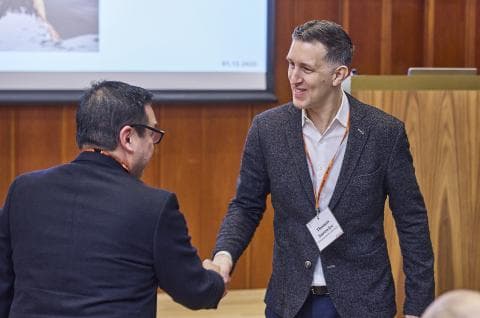
The programme continued with welcome remarks from Lillian Røstad, Director of Simula, and Thomas Surowiec, Deputy Director of SURE-AI, before Centre Director Baltasar Beferull-Lozano outlined the scientific vision for the years ahead.
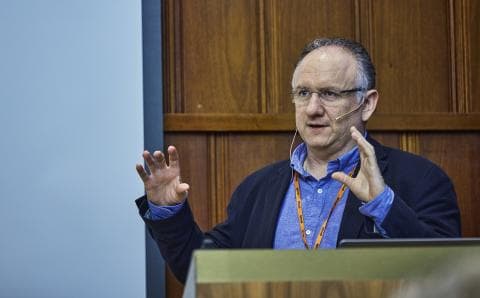
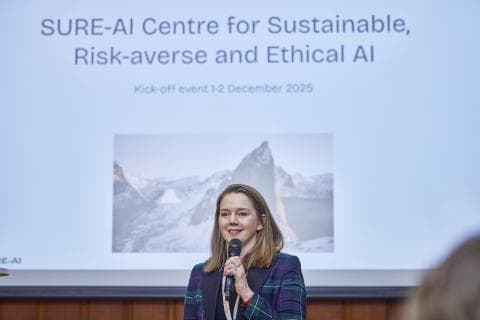
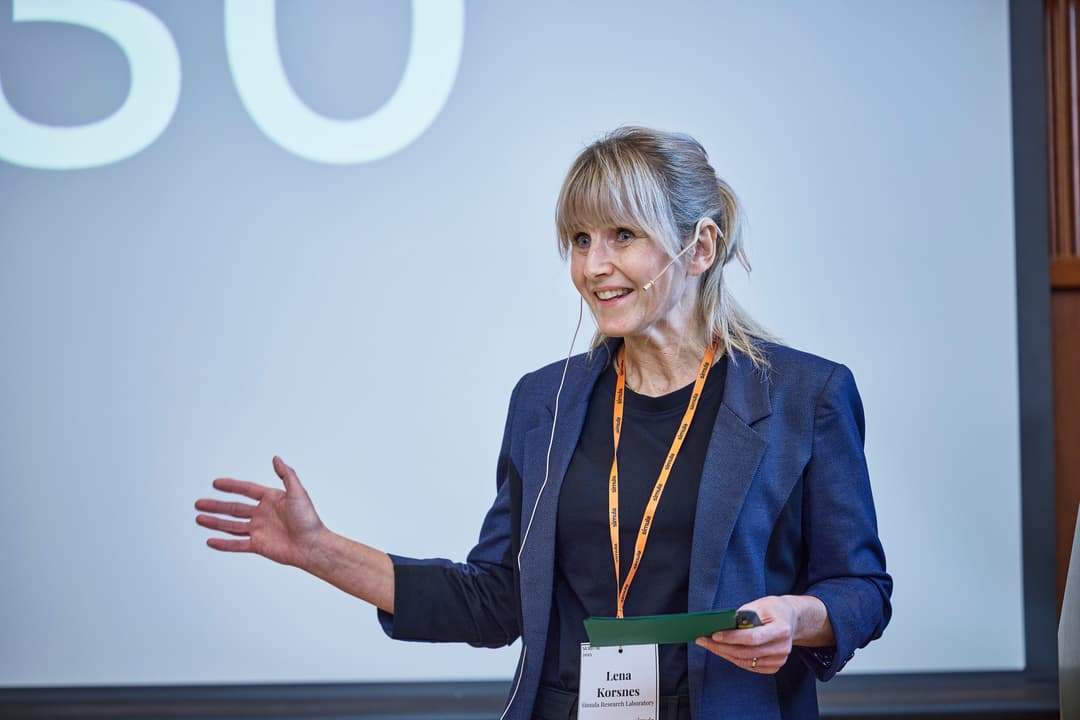
Administrative leader Lena Korsnes then spoke about how the centre is organised to ensure progress and collaboration.
“Success is not accidental. It depends on how effectively we organise and structure our work (...) Behind these impressive partner logos, it’s actually just about us and how we do things together. We are a high number of dedicated individuals excited to contribute toward a more sustainable, risk-averse and ethical AI future.”
The centre’s Director of Innovation, Holger Hussmann, introduced SURE-AI’s three innovation clusters (complex systems, efficient learning and control, and risk) and explained how close collaboration with industry will be essential for creating real-world impact.
What's in your black box, and how can AI contribute to climate change research?
The kick-off meeting also featured two scientific talks on the technical foundations of AI and its environmental implications. Professor Antonio Ortega (University of Southern California) discussed how dataset geometry can help us understand complex systems, while Marit Sandstad (CICERO) focused on AI’s environmental footprint and its potential in climate research.
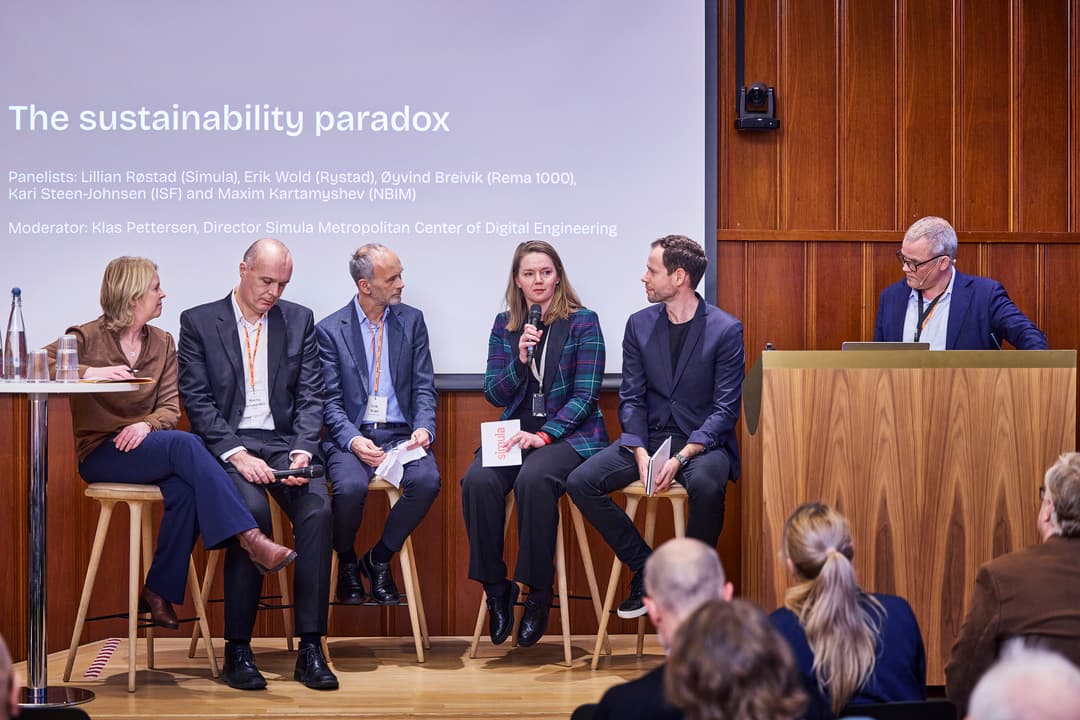
This was followed by a panel discussion on the sustainability paradox of AI, moderated by Klas Pettersen, Director of SimulaMet. The panelists emphasised the need for cross-sectoral collaboration, organisational competence and alignment to ensure AI projects solve the right problems and aim to achieve a net-positive climate or social impact.
Setting the direction for the years ahead
With 19 partner institutions and a mandate that spans technology, innovation and societal impact, SURE-AI begins its work with strong momentum and high expectations. As Minister Aasland concluded in her opening remarks:
“Congratulations on the official start of the SURE-AI Center. It is of vital importance to our future.”
The centre continues its programme on Tuesday with a dedicated research and planning day for its scientific teams.
This is SURE-AI
The Center for Sustainable, Risk-Averse and Ethical AI (SURE-AI) is one of the six national AI research centres in Norway. Funded by the research council of Norway and will run until 2030.
Visit their website at sure-ai.no.
The centre is hosted by Simula and located at SimulaMet. It gathers 19 partners from academia and industry.
Academic partners: Handelshøyskolen BI, Universitetet i Oslo (UiO), Norges teknisk-naturvitenskapelige universitet (NTNU), UiT Norges arktiske universitet, CICERO - Center for International Climate Research, Institutt for energiteknikk (IFE), Institutt for samfunnsforskning, SINTEF.
Industry partners: Rystad Energy, LSEG, Norges Bank, NCE Finance Innovation, Scalemem Dolphin Interconnect Solutions, REMA 1000, Telenor, Norsk Hydro and Skatteetaten.
The centre also includes international researchers from the following institutions: EPFL, ETH Zürich, University of Southern California, University of California, Berkeley, Delft University of Technology, Texas A&M University, Imperial College London, FAU Erlangen-Nürnberg, George Mason University, UCL, Universität Wien, Université Côte d'Azur, Inria, CNRS and Universidad de Deusto.