SimulaMet assists DSB in the development of a new emergency network in Norway
Published:
The Center for Resilient Networks and Applications (CRNA) at SimulaMet has been commissioned by the Norwegian Directorate for Civil Protection (DSB) to deliver a test and development platform, as well as provide expert assistance for the work on the emergency and preparedness actors' new broadband emergency network.
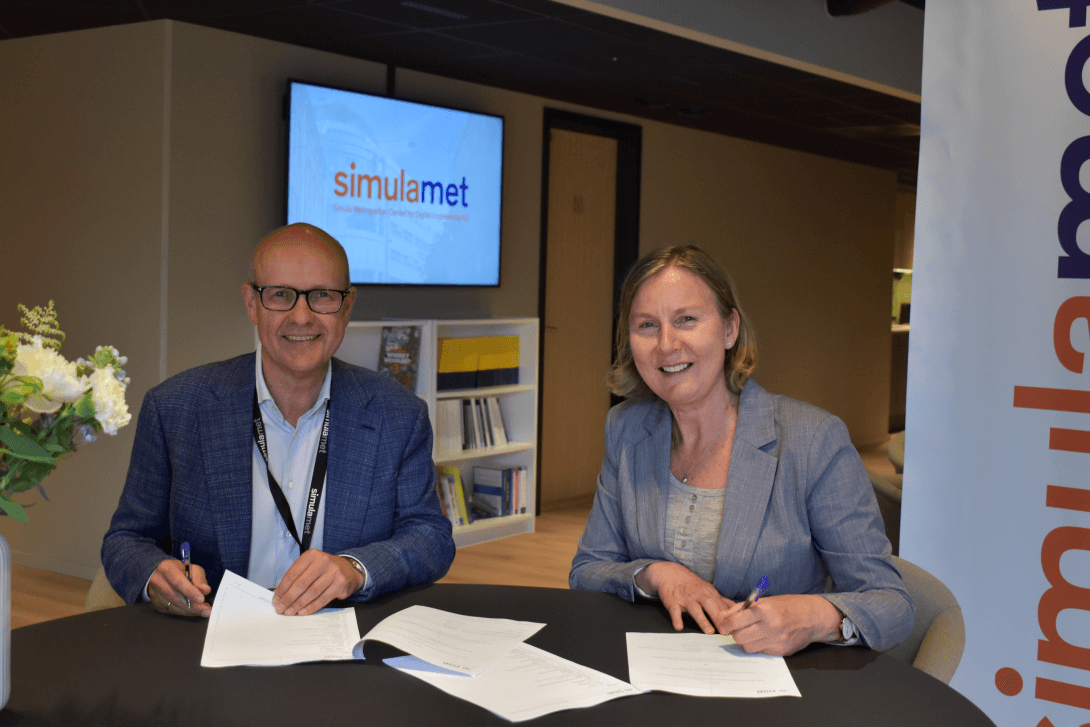
Top image from the signing between Director of SimulaMet, Olav Lysne and Director of DSB, Elisabeth Aarsæther.
"SimulaMet is proud to be working together with DSB on creating the emergency communication network of the future. Our collaboration is a perfect example of how cutting edge academic research can lead to present day societal contributions," says Professor Olav Lysne, Director of SimulaMet.
"Testing activities and a collaboration with SimulaMet put us in a better position to set precise requirements for the procurement of the new emergency network. We are building important expertise and reducing risk ahead of a large and complex investment," says DSB Director Elisabeth Aarsæther.
The commission will lay the foundation for detailed design and research on critical topics such as resilience, performance and robustness of mission-critical communication services based on modern mobile technology.
It will support DSB in defining detailed specifications for the future procurement of a new emergency network.
"Today's emergency network, which is based on the aging TETRA standard for radio communication, will be replaced with modern mobile technology that allows for the development of new services and innovative solutions," says Senior Research Engineer Jan Marius Evang, who will lead the work together with Research Professor Haakon Bryhni.
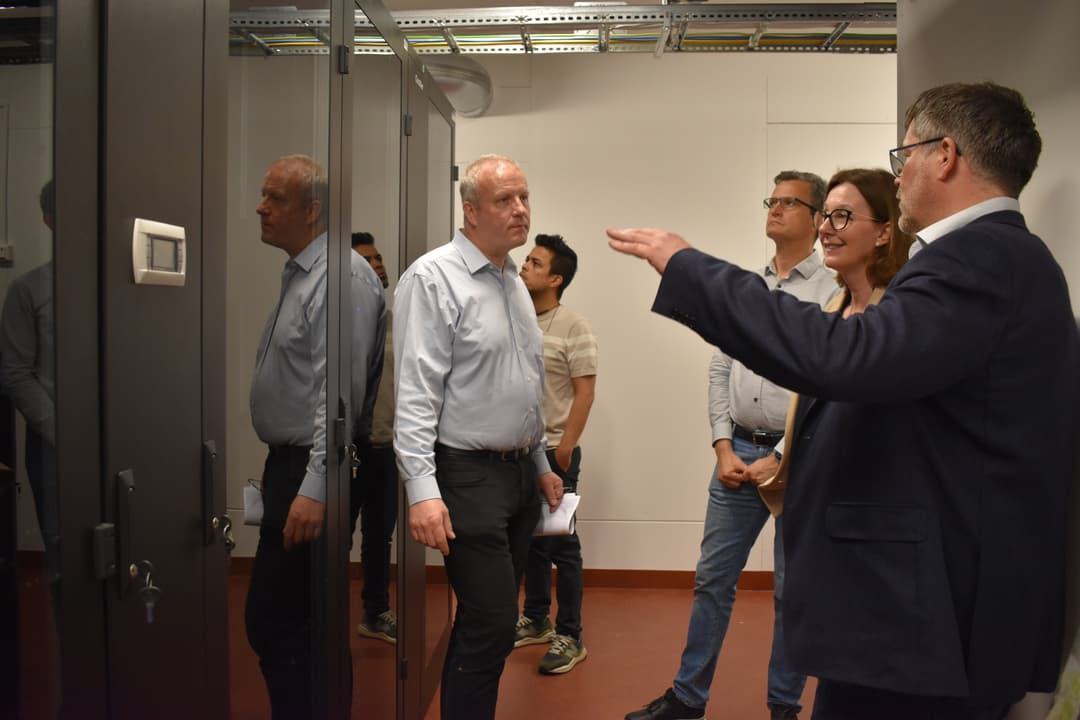
The testing will include terminals, base stations, networks, and application services. As part of this, SimulaMet will deploy a state-of-the-art, redundant 5G Core network within its data center, with both local and cloud-based installations.
Outdoor 5G base stations will also be established to provide coverage at SimulaMet's premises at Bislett. In addition, a test network for communication with aircraft will be established, where seamless transition to commercial mobile networks will be verified.
The central infrastructure will further include the evaluation of distributed emergency service platforms (MCX) with a strong emphasis on performance, scalability, and quality of service. The findings will contribute to the development of requirement specifications and deeper studies into the feasibility, performance, and robustness of future emergency communication services.
"We are excited that the Simula Interoperability Lab (SMIL) and the CRNA team can use our experience together with DSB to study how commercial cellular technology and distributed datacenters can be used to build a robust and resilient network for critical applications," concludes Bryhni.
Throughout the contract period, SimulaMet will collect an extensive range of datasets to support scientific publications and provide valuable recommendations for other stakeholders interested in the use of cellular technologies for mission-critical communications.
The contract covers the period 2025–2030, with an option for extension in the period 2031–2033.